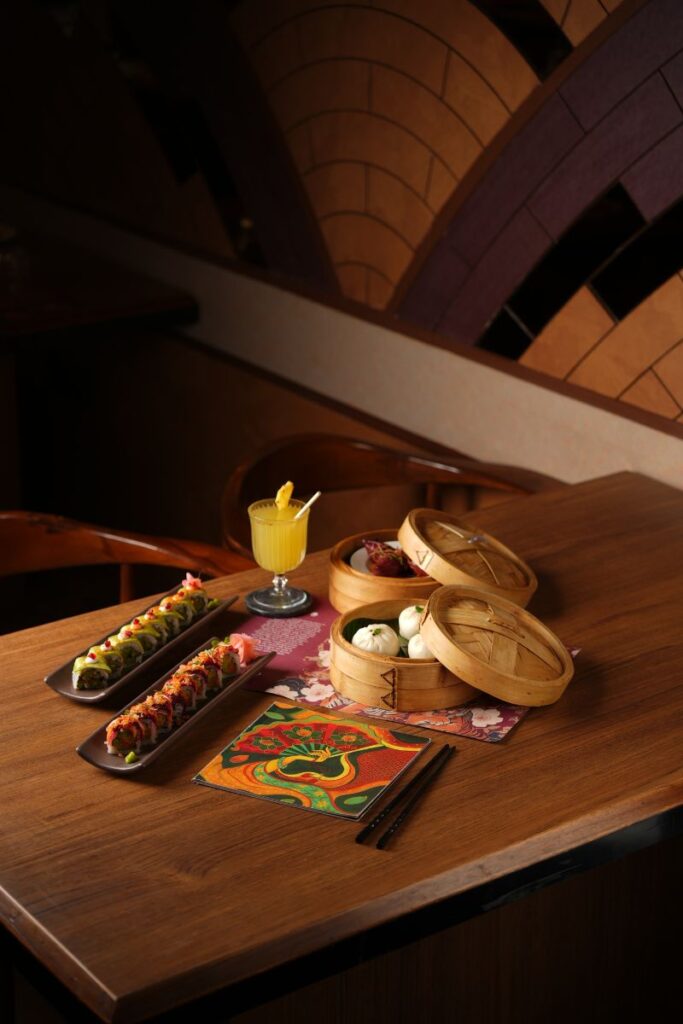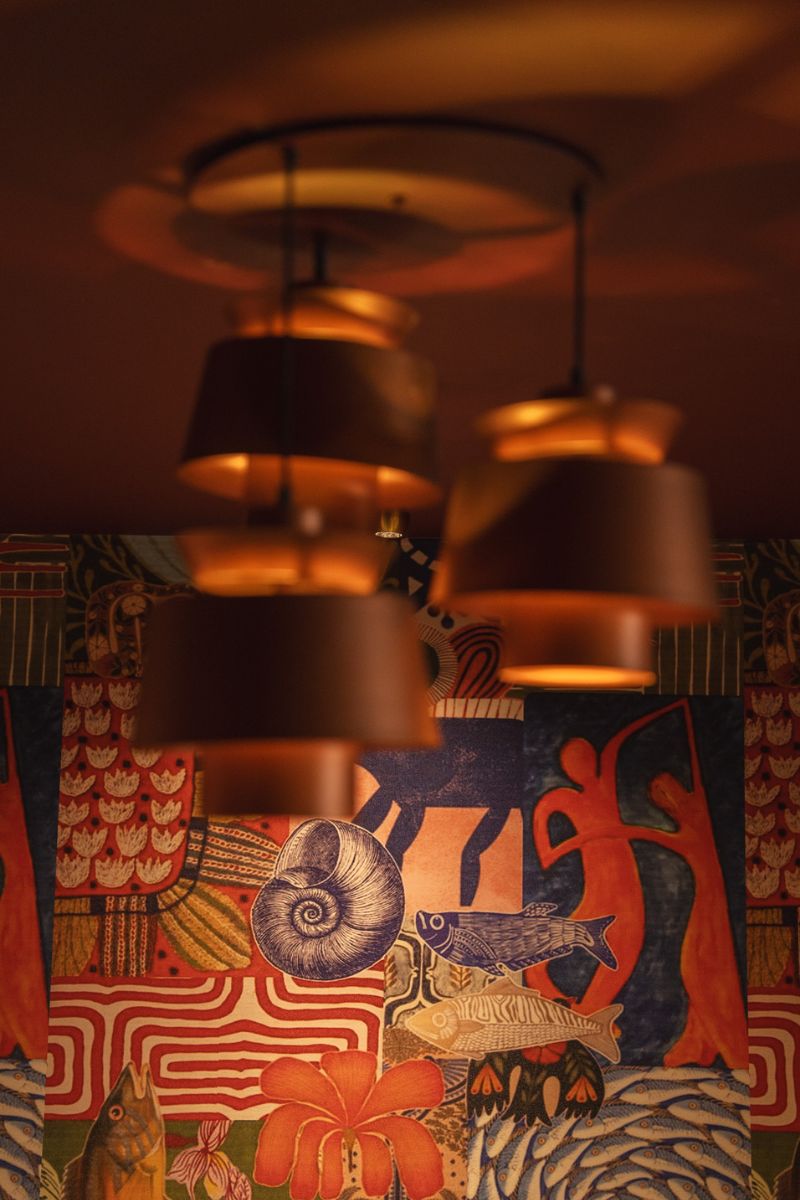
Most tasting menus reach for variety by changing ingredients course to course. Yyaki does the opposite. It picks one, duck, and dares to hold your attention across nine courses without it ever growing repetitive. The wager is that a single protein, handled with enough range in cut, technique and texture, can carry an entire meal on its own. Judging by the reception since it opened inside Gurugram’s Japonico, that wager is paying off.
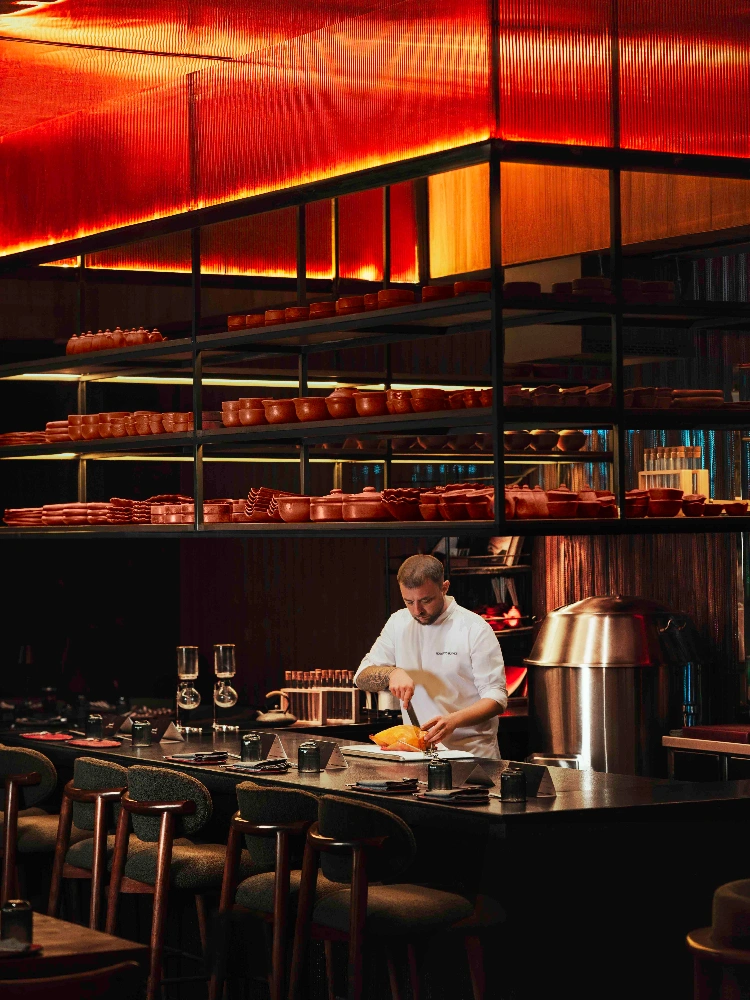
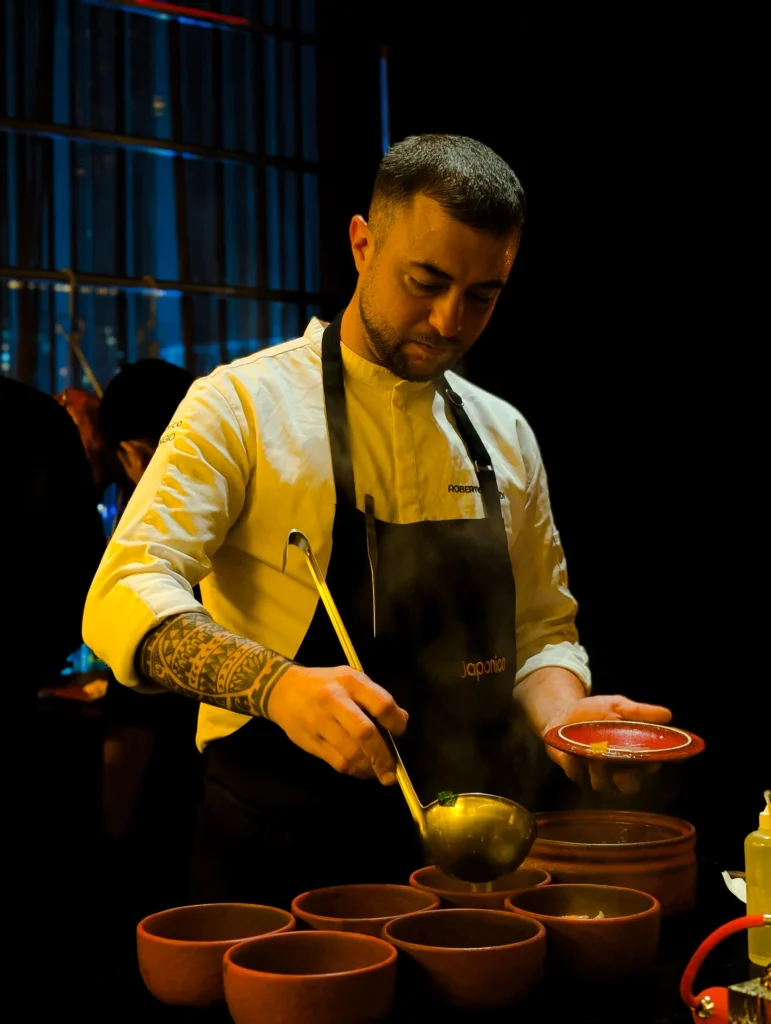
Chef Roberto Blondi
The pairing makes sense once you know the people behind it. Restaurateur Sahil Sambhi and chef Roberto Blondi already built Japonico into one of the city’s most reliably busy rooms, and Yyaki reads like the ambitious sibling concept, tucked within the same address but built to feel like an entirely separate universe. Guests enter through Japonico and pass into a second space beyond it, quieter and more focused, where a mirrored ceiling is the one visual thread connecting the two.
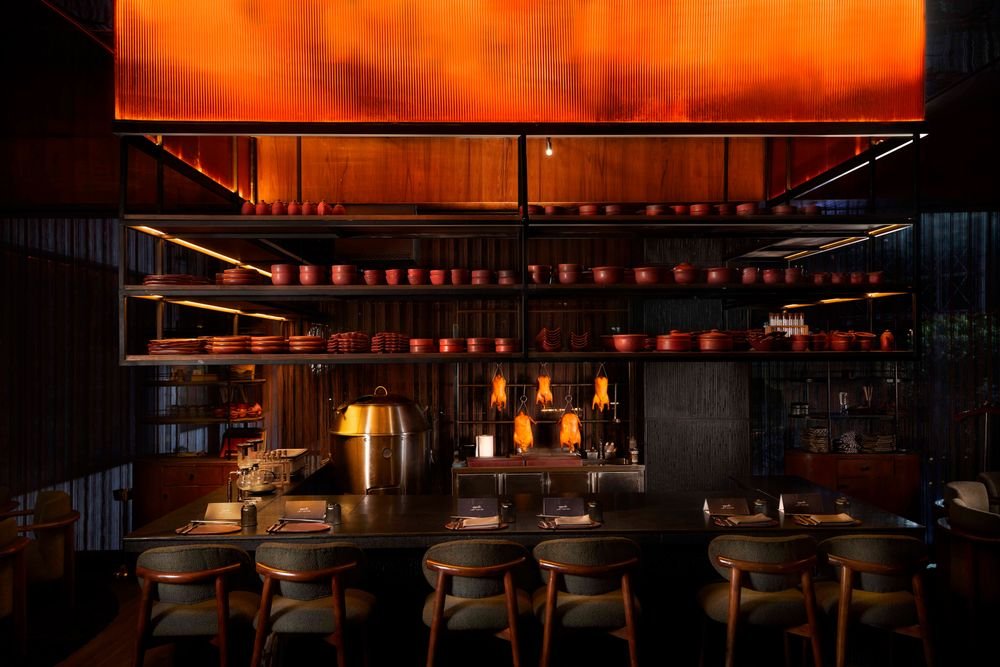
Inside, the room is organised around counters rather than tables, four of them, each its own micro restaurant with a dedicated chef team. There is one for teppanyaki, one for robata, one for sushi, and the centrepiece: a counter given over entirely to duck, seating a tight six to eight guests who watch every course come together an arm’s length away.
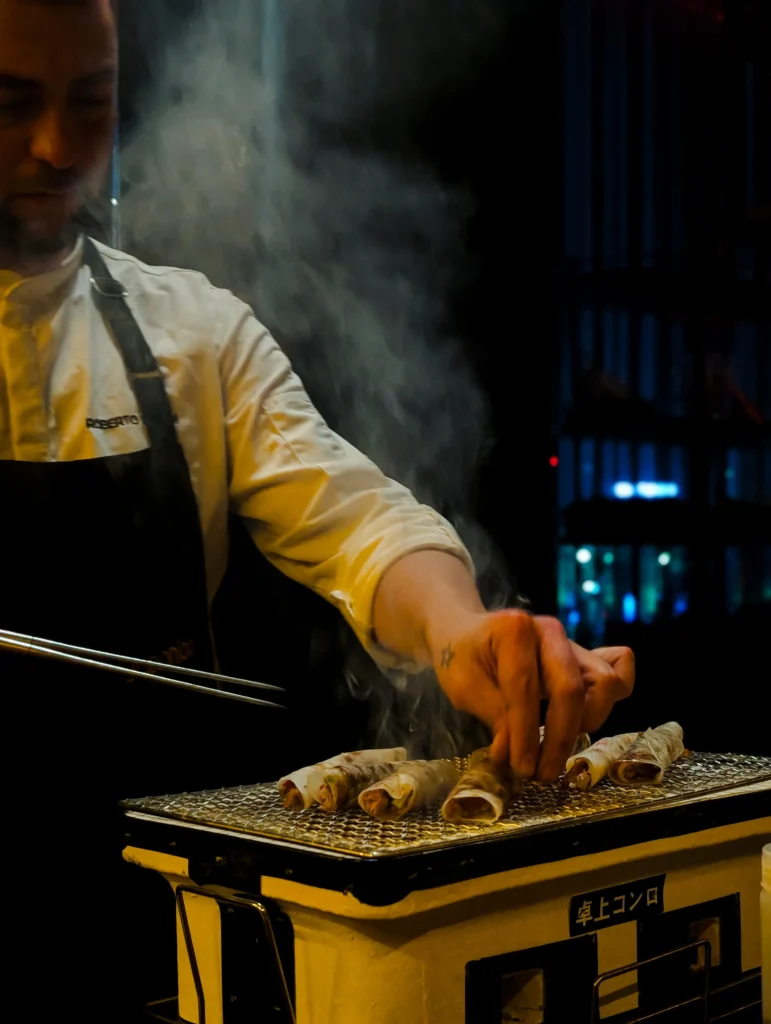
That duck counter is the real story. Across nine courses, no cut or cooking method is allowed to repeat itself. An amuse bouche of duck sandwiched between crisp skin crackling opens the meal, put together right at the counter. What follows ranges widely: a parfait tart layered with compressed green apple and hazelnut, a nugget with a molten centre dressed up with hollandaise, Beluga caviar and gold leaf, a delicate clear soup finished with shaved black truffle, a Cantonese style salad, and a nigiri built on duck skin instead of fish. Midway, the meal deliberately slows down, giving guests a break to wander over and watch the teppanyaki chef work before the heavier courses land: a smoked duck roll, a self assembled lettuce wrap, and a grilled duck leg served over chilli garlic fried rice with gochujang. Dessert brings the meal full circle with orange gelatine, a duck skin crumble and, notably, duck ice cream.
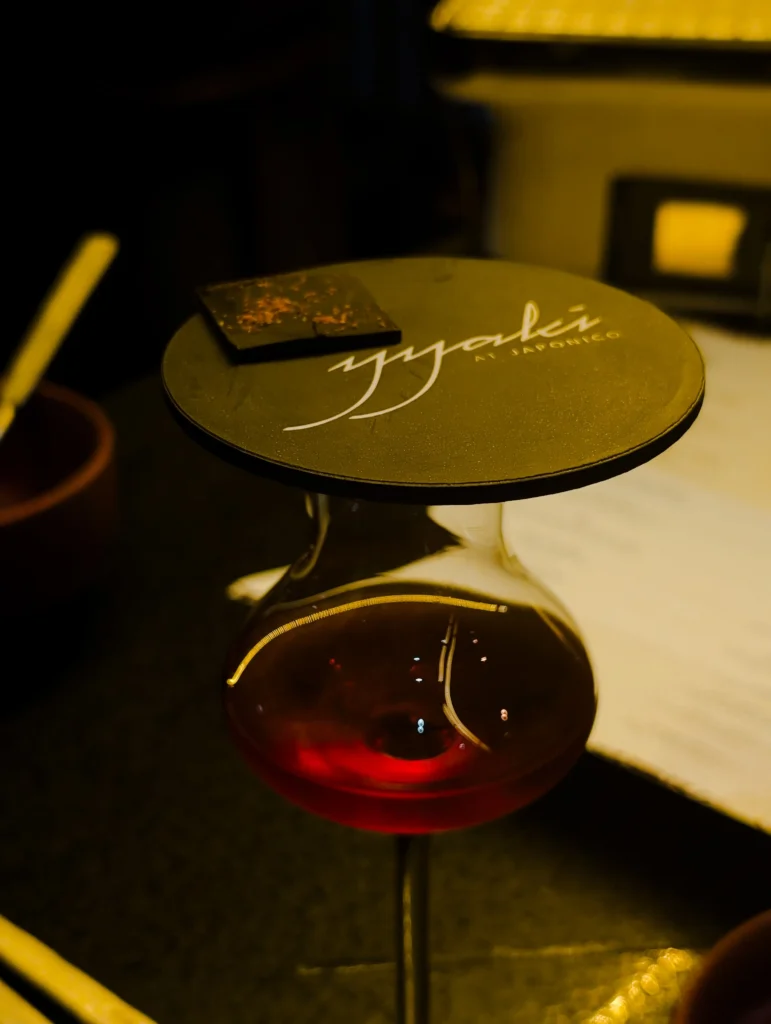
None of it arrives without a drink alongside. Every course is paired with either a cocktail or a zero proof option, built to support the food rather than upstage it. The exclusivity extends to the booking itself: reserve a seat and a short questionnaire follows, asking which counter you want, which sitting suits you, and whether you would like the alcoholic or zero proof pairing. Guests arrive to find a menu already printed with their name and photograph, part functional place card, part souvenir.
What can be said with confidence is that it is doing something genuinely uncommon in a city with no shortage of tasting menus: building an entire dining experience around a single, often overlooked protein, and making that restraint feel like the whole point.